Journal /
Cooking
The 20-minute loaf (and why it doesn’t exist)
Every week someone asks for a quicker loaf. There is one, and it tastes of hurry. Here is what time actually does to bread, and how to fit it around a working week.

Journal /
Cooking
Every week someone asks for a quicker loaf. There is one, and it tastes of hurry. Here is what time actually does to bread, and how to fit it around a working week.
I get the same message most weeks: is there a version of this bread I can make in twenty minutes? I understand the question. Nobody has a free afternoon on a Tuesday. But the answer is no, and the reason is the most useful thing I can teach you about bread.
Flour, water and salt do not become a good loaf because you work hard. They become a good loaf because time lets yeast and bacteria do slow, patient work that you cannot hurry with your hands.
While your dough sits on the counter, three things happen. Gluten organises itself, so the dough gets stronger without kneading. Yeast makes gas, which gives you rise. And bacteria make acids and flavour, which is the difference between bread and warm cardboard.
You can speed up the rise with more yeast and a warm cupboard. You cannot speed up the flavour. That is why quick loaves look fine and taste of very little.
“Good bread takes about ten minutes of your attention, spread across a day. The rest of the time it is working and you are not.”
The trick is not to find more time. It is to put the waiting where you are busy anyway. Mix before work. Fold twice in the evening. Shape before bed and leave it in the fridge overnight. Bake it in the morning while the kettle boils.
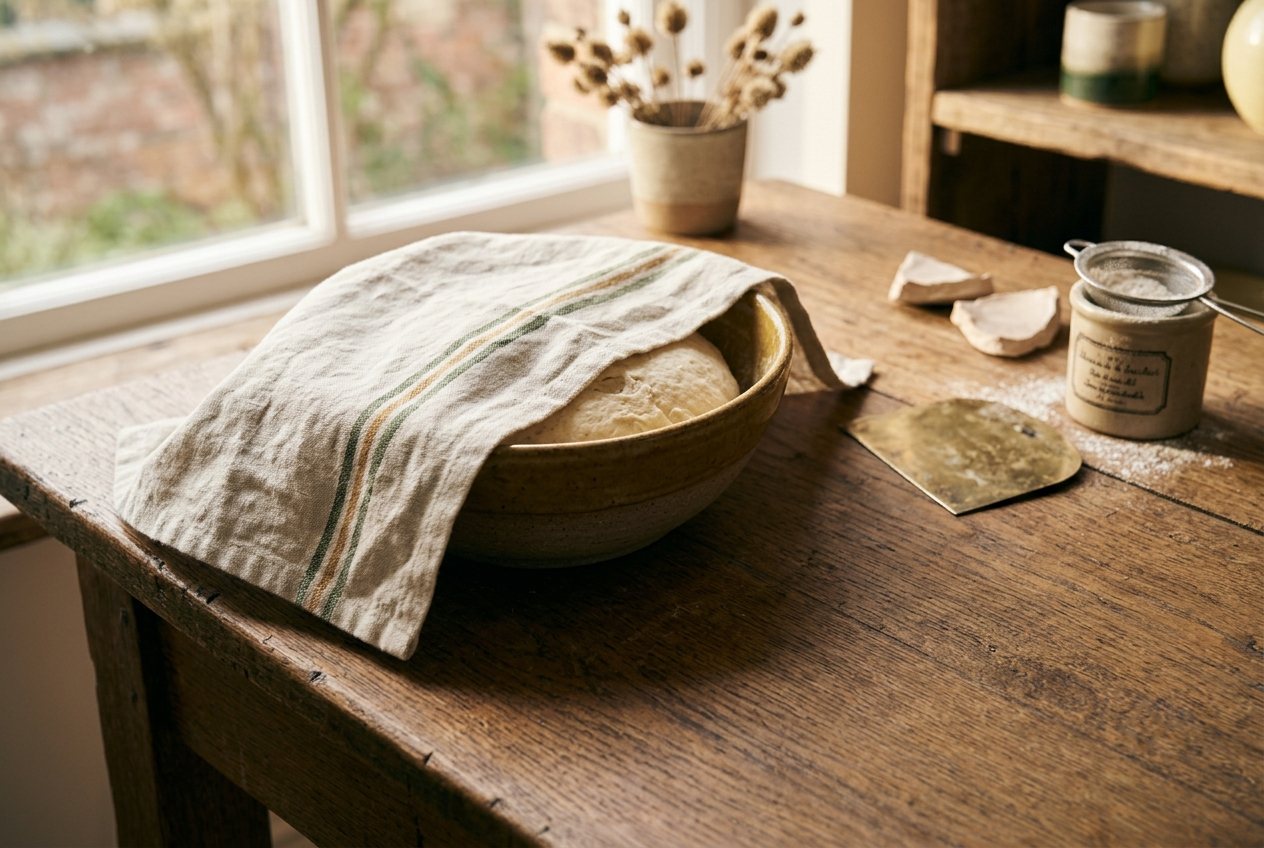
The fridge is your friend here. Cold slows everything down, so a dough you shaped at ten at night will happily wait until seven the next morning, and it will taste better for the delay.
People sometimes worry that a long rise means a lot of fuss. It is the opposite. A short, warm rise needs watching, because it can go too far in half an hour. A long, cool rise is forgiving. If you are an hour late home, nothing terrible happens. The dough simply waits, a little more sour and a little more interesting.
It also changes how you shop and cook. A loaf that is ready on Monday morning sets up the week: toast, sandwiches, the end of it in soup on Thursday. Students on the course usually find that once the rhythm is in place they stop buying bread altogether, not because it is cheaper, though it is, but because the habit takes care of itself.
If you only remember one thing, make it this: you are not the engine. You start the process and then you get out of its way.
Make one loaf on Saturday and do nothing else to it but fold it three times. On Sunday, shape it and put it in the fridge. Bake it Monday morning. Write down the times. You will find the work adds up to about a quarter of an hour, and you will have a loaf you would happily give away.
That is the whole secret, and it is the one people least want to hear: the twenty-minute loaf does not exist, but the ten-minute loaf, spread over a day, absolutely does.

Learn this properly
6 weeks
· £240


